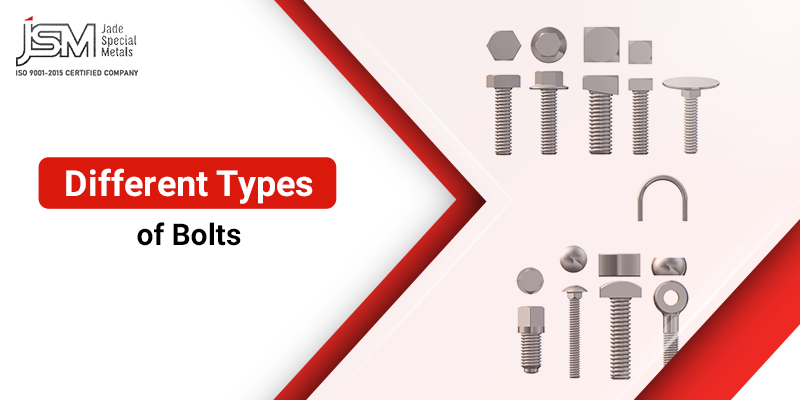
When choosing the appropriate solution in terms of fastening in industrial, construction, or mechanical applications, it is crucial to understand the bolts types. The different types of bolts are shaped in such a way that they give a strong and secure attachment between the parts with the help of a threaded shaft and nut that forms the clamping force. Bolts have holes that are usually pre-drilled and closed using a corresponding nut in order to eliminate the possibility of movement in the axial direction, thus maintaining structural stability, unlike screws. Standardized grade markings reflect the bolt strength, which is based on the ability to bear a load and work under stress. We are a supplier of high-quality bolts that are designed to match international standards and are reliable, durable, and precise, and are applicable in a large variety of demanding purposes.
Different Bolts Types
The bolts are commonly used to connect different structures together. All different types of bolts are made according to size and usage. Some of the most used bolt types are listed below.
1. Anchor Bolt
Anchor bolts are commonly used in concrete surfaces to connect two different structures or pieces of equipment. They provide strong holding power to the structure and provide tensile and shear loads. The bolts are mostly used in construction places, such as securing columns, machinery, or any heavy equipment foundation.
2. Arbor Bolt
The Arbor bolts are designed to be used in power tools like miter and circular saws. It holds the blade in one place to ensure a stable and safe operation. These bolts are often used in reverse threading to prevent loosening during rotation.
3. Blind Bolt
Where access is available from only one side in those places, blind bolts are used. They provide strong fastening in tight or restricted areas. These bolts are commonly used in automotive, structural, and maintenance applications.
4. Carriage Bolt
The carriage bolts come with a smooth, round head and a square neck. The square section of the lock itself prevents the bolts from rotating during tightening. They are commonly used in wood-to-metal or wood-to-wood structures.
5. Elevator Bolt
The elevator bolts are built with a wide, flat head and threaded shaft. They are used in conveyor systems or elevator assemblies where a low-profile head is required. This design prevents it from snagging in moving equipment.
6. Eye Bolt
The eye bolts come with a circular loop at the top that is used to attach the ropes chain or cables. They are commonly used to lift or rig the applications.
7. Flange Bolt
The flange bolts are designed in such a way that the washer is built into the head and it will assist in dispersing the pressure effectively all over the structure. Such flanges are mostly found in automobile and machinery assemblies.
8. Hex Bolt
The hex bolts come with a design of six side heads used with a nut for fastening. They are the most common flanges used in construction and industrial applications; they come in different grades and materials.
9. J-Bolt
The J bolt structure is similar to the J-shaped letter often used in concrete. They are used to anchor different equipment. Its curved design improves the stability and holds the structure properly.
10. Lag Bolt
Lag bolts are heavy-duty fasteners commonly used in wood construction work, and they come in a larger size and are stronger than regular screws. They are used to support the heavy load structure.
11. Machine Bolt
Machine bolts work by connecting two different metal components together with a nut. They are typically used in many machines and industrial assembly lines.
12. Hanger Bolt
The hanger bolts are double-ended fasteners with wood thread on one side and machine thread on the other side. They are commonly used to assemble furniture and mounting applications.
Conclusion:
Choosing the right fasteners begins with the right choice of understanding the types of bolts available and what they can be used for. The above bolts differ according to various loads, material and structural needs. Whether it is the construction of a structure, fixing a machine, developing a car system, or assembling furniture, each bolt matters in regard to strength, stability, and safety. The selected right fastening option not only contributes to the enhanced functioning of the equipment but also assists in reducing the risks of failures and future maintenance problems. Jade Alloy provides high-quality bolts that guarantee efficient fastening of any project by ensuring that you have the right type of bolt for the required project needs.
Frequently Asked Questions (FAQ)
1. What are the types of bolts?
There are many types of bolts, and each is made for a specific purpose. Some common ones include hex bolts, carriage bolts, eye bolts, anchor bolts, U-bolts, and flange bolts. The right choice depends on where and how the bolt will be used in construction, automotive work, or machinery.
2. What is a type 8 bolt?
A “type 8 bolt” usually means a Grade 8 bolt in the imperial system. These are high-strength bolts made from hardened steel and are commonly used in heavy-duty applications like trucks and industrial equipment.
3. Are class 8.8 bolts strong?
Yes, Class 8.8 bolts are considered strong. They are high-tensile metric bolts and are widely used in structural and mechanical assemblies where good strength is required.
4. How to identify bolt grade?
You can identify a bolt’s grade by looking at the markings on its head. Imperial bolts use radial lines (for example, six lines usually indicate Grade 8), while metric bolts have numbers like 8.8 or 10.9 stamped on them.
5. What does M10 bolt mean?
An M10 bolt is a metric bolt with a 10 mm diameter. The “M” stands for metric, and “10” tells you the thickness of the bolt’s shank in millimeters.