Nitronic 50 Round Bar Suppliers, Manufacturer & Exporter

Jade Alloys is the manufacturer, supplier and exporter of Nitronic 50 Round Bar to the Gulf, Asia and Europe. We supply ASTM A276 Nitronic 50 bars, rods, and sections from a ready-stocked inventory of Nitronic Steel Round Bars, backed by full EN 10204 3.1/3.2 Mill Test Certificate traceability. Our capabilities of hot rolling, cold drawing, centreless grinding and turning enable us to supply the full range of sizes (2-400 mm diameter) with a guaranteed lead-time ensuring that OEM fabricators, EPC contractors and MRO customers get certified material fast.
Nitronic 50 (also known as XM-19 Round Bar, UNS S20910, and DIN 1.3964) is one of the most advanced austenitic stainless steel bar alloys. Its yield strength is nearly twice that of conventional 316L stainless steel but with comparable corrosion resistance, so is unique in the high-performance alloy sector, offering structural performance previously only achievable with duplex or super-duplex stainless steels but with superior ductility, weldability and non-magnetic properties in the annealed condition.
Quick Section Links
- What Is Nitronic 50 (XM-19 / UNS S20910)?
- Nitronic 50 vs Other Stainless Steels – Strength & Corrosion Comparison
- Stainless Steel Nitronic 50 Round Bar Specifications
- Nitronic 50 Rod Chemical Composition
- ASTM A276 Nitronic 50 Round Bar Mechanical Properties
- Corrosion Resistance of Nitronic 50 Round Bars
- Welding Nitronic 50 / XM-19 Round Bars
- Machining Nitronic 50 Round Bars
- Equivalent Grades of Nitronic 50 / XM-19 Round Bar
- Available Sizes of Nitronic 50 / XM-19 Round Bar
- Nitronic 50 Round Bar Price
- Applications of Nitronic 50 / XM-19 Round Bars
- Why Choose Jade Special Metals for Nitronic 50 Round Bars?
- Related Products
- Frequently Asked Questions – Nitronic 50 Round Bars
What Is Nitronic 50 (XM-19 / UNS S20910)?
Nitronic 50 is a nitrogen-strengthened austenitic stainless steel developed by Armco Steel (now AK Steel/Cleveland-Cliffs) in the early 1970s under the trademarked name Nitronic 50. Its AISI designation is XM-19; the UNS number is S20910 and the European Werkstoff number is 1.3964. The alloy achieves its exceptional strength through two synergistic mechanisms: solid-solution strengthening from the elevated chromium (20.5–23.5%), molybdenum (1.5–3.0%), niobium (0.1–0.3%), and vanadium (0.1–0.3%) content, combined with interstitial nitrogen (0.20–0.40 wt.%) that dramatically increases yield strength without the austenite-to-martensite transformation that occurs in lower-nitrogen grades under cold work.
The nitrogen content performs three simultaneous functions: it stabilises the austenite phase (eliminating cold-work-induced magnetism at moderate reductions), it increases pitting and crevice corrosion resistance by raising the Pitting Resistance Equivalent Number (PREN = Cr + 3.3Mo + 16N), and it increases tensile and yield strength at both ambient and cryogenic temperatures all without sacrificing the 45%+ elongation that makes the alloy highly formable and weldable.
Nitronic 50 vs Other Stainless Steels – Strength & Corrosion Comparison
The table below places Nitronic 50 Bar in context against the grades it most commonly replaces in engineering specifications:
| Grade / Alloy | 0.2% Yield (MPa) | UTS (MPa) | Elongation (%) | PREN | Magnetic? |
|---|---|---|---|---|---|
| Nitronic 50 (S20910) | 415 (annealed) | 795 | 45 | ~35–40 | No (annealed) |
| 316L (S31603) | 170 | 485 | 40 | ~24 | No |
| 317L (S31703) | 205 | 515 | 40 | ~29 | No |
| 2205 Duplex (S32205) | 450 | 620 | 25 | ~35 | Yes (ferrite) |
| 2507 Super Duplex | 550 | 800 | 25 | ~42 | Yes (ferrite) |
| Alloy 625 (N06625) | 415 | 930 | 30 | ~52 | No |
| 904L (N08904) | 220 | 490 | 36 | ~36 | No |
Key insight: Nitronic 50 round bars achieve a PREN comparable to duplex grades like 2205 and austenitic 904L, while offering approximately 2.4× the yield strength of 316L and maintaining a non-magnetic structure in the annealed condition. This combination is rarely matched by conventional austenitic stainless steels.
Stainless Steel Nitronic 50 Round Bar Specifications
| Parameter | Details |
|---|---|
| Alloy designation | Nitronic 50 / XM-19 / UNS S20910 / DIN 1.3964 / Werkstoff Nr. 1.3964 |
| Primary standards | ASTM A276 (bar), ASTM A479 (bar for pressure), ASME SA276, ASME SA479 |
| Additional standards | ASTM A484 (general), ASTM A182 (forgings/flanges), AMS 5764, EN 10088-3 |
| Diameter range | 2.0 mm – 400 mm (custom >400 mm on enquiry) |
| Standard lengths | 3,000 mm & 6,000 mm; cut-to-size (+2/−0 mm tolerance) |
| Forms available | Round, flat, square, hex (A/F), angle, channel, threaded, hollow bar, billet, forging |
| Processing technique | Forged, hot rolled, cold drawn, peeled & polished, centreless ground |
| Surface finish | Black (hot rolled), bright polished, rough turned, No.4 / BA / mirror finish, HRAP |
| Condition | Annealed (standard); solution annealed and cold-worked (Nitronic 50HS) |
| Tolerance class | h8, h9, h10, h11 (ISO 286-2); Class A/B/C to BS 970-3 |
| Hardness (annealed) | 241 BHN max / B96 HRB max |
| Packaging | Seaworthy export packing: wooden box, PVC-wrapped bundles, steel-strapped coils |
| MTC | EN 10204 3.1 standard; 3.2 (third-party) on request |
Nitronic 50 Rod Chemical Composition (UNS S20910 / ASTM A276)
| Element | C | Mn | Si | P | S | Ni | Cr | Mo | N | Nb | V |
|---|---|---|---|---|---|---|---|---|---|---|---|
| Min | – | 4.00 | – | – | – | 11.50 | 20.50 | 1.50 | 0.20 | 0.10 | 0.10 |
| Max | 0.06 | 6.00 | 1.00 | 0.045 | 0.030 | 13.50 | 23.50 | 3.00 | 0.40 | 0.30 | 0.30 |
Fe: Balance. The combination of niobium and vanadium is unique among standard austenitic stainless steels. These elements act as grain refiners, contributing to higher yield strength while maintaining toughness at low temperatures.
The molybdenum addition further enhances resistance to pitting corrosion, especially in chloride-rich environments where UNS S20910 Round Bar is widely preferred over conventional 300-series stainless steels.
Role of Key Alloying Elements in Nitronic 50
| Element | Typical Range | Technical Function |
|---|---|---|
| Nitrogen (N) | 0.20–0.40 wt.% | Primary strengthening element; stabilises austenite; raises PREN by 16×N; improves pitting resistance |
| Chromium (Cr) | 20.5–23.5 wt.% | Passive film former; high content ensures oxidation resistance to ~1000°C; contributes to PREN |
| Molybdenum (Mo) | 1.5–3.0 wt.% | Pitting and crevice corrosion resistance; strengthens passive film in chloride media; PREN contribution 3.3×Mo |
| Niobium (Nb) | 0.10–0.30 wt.% | Grain refiner; forms stable NbC/NbN precipitates; improves strength and sensitisation resistance |
| Vanadium (V) | 0.10–0.30 wt.% | Secondary grain refiner; acts synergistically with Nb to maintain fine austenite grain during hot rolling |
| Manganese (Mn) | 4.0–6.0 wt.% | Austenite stabiliser (compensates for reduced Ni); increases nitrogen solubility in melt; controls hot workability |
| Nickel (Ni) | 11.5–13.5 wt.% | Austenite phase stabiliser; improves toughness at sub-zero temperatures; corrosion resistance in reducing media |
ASTM A276 Nitronic 50 Round Bar Mechanical Properties
Room Temperature and Elevated Temperature Tensile Properties
| Temperature (°F/°C) | UTS (ksi) | 0.2% YS (ksi) | Elongation (%) | Reduction of Area (%) | Impact (ft-lbs) |
|---|---|---|---|---|---|
| −320°F / −196°C | – | – | – | – | 50 |
| −100°F / −73°C | – | – | – | – | 115 |
| 75°F / 24°C (RT) | 117 (min 95) | 60 (min 50) | 45 | 70 | 170 |
| 200°F / 93°C | 107 | 50 | 43.5 | – | – |
| 400°F / 204°C | 96 | 38 | 43.5 | – | – |
| 600°F / 316°C | 92 | 35 | 42.5 | – | – |
| 800°F / 427°C | 89 | 34 | 43.5 | – | – |
| 1000°F / 538°C | 84 | 32 | 41 | – | – |
| 1200°F / 649°C | 74 | 31 | 38 | – | – |
| 1350°F / 732°C | 66 | 31 | 37 | – | – |
| 1500°F / 816°C | 52 | 30 | 41 | – | – |
Nitronic 50HS (High-Strength Condition) Mechanical Properties
Nitronic 50HS is produced by controlled cold working of the annealed bar to a minimum 30% reduction, which raises yield strength to 110–150 ksi (758–1034 MPa) depending on bar diameter and reduction level. The table below shows typical HS properties by bar diameter:
| Bar Diameter | Min. UTS (ksi) | Min. 0.2% YS (ksi) | Min. Elongation (%) |
|---|---|---|---|
| Up to 1.50″ (38 mm) | 150 | 120 | 12 |
| 1.501″–3.00″ (38–76 mm) | 140 | 110 | 15 |
| 3.001″–5.00″ (76–127 mm) | 130 | 100 | 18 |
| 5.001″–7.00″ (127–178 mm) | 115 | 85 | 20 |
Physical Properties of UNS S20910 Round Bar
| Property | Value |
|---|---|
| Density | 0.285 lb/in³ (7.89 g/cm³) |
| Melting range | 2,579–2,642°F (1,415–1,450°C) |
| Modulus of elasticity | 26.2 × 10⁶ psi (180 GPa) at RT |
| Electrical resistivity | 492 ohm·circ-mil/ft (0.82 µΩ·m) |
| Thermal conductivity | 108 BTU·ft/ft²·hr·°F (18.7 W/m·K) at RT |
| Coefficient of thermal expansion (70–600°F) | 9.2–9.6 × 10⁻⁶ /°F (16.6–17.3 × 10⁻⁶ /°C) |
| Magnetic permeability (annealed) | < 1.02 (non-magnetic) |
Corrosion Resistance of Nitronic 50 Round Bars
Nitronic 50 round bars achieve their corrosion resistance through a stable, adherent Cr₂O₃-rich passive film augmented by the high molybdenum, nitrogen, niobium, and vanadium content. The Pitting Resistance Equivalent Number (PREN), calculated as Cr + 3.3Mo + 16N, falls in the range of 35–42 for UNS S20910 — comparable to 2205 duplex and significantly above 316L (PREN ~24) or 317L (PREN ~29). This elevated PREN translates to reliable resistance in the following environments:
Corrosion Performance by Environment
| Environment | Resistance | Engineering Notes |
|---|---|---|
| Seawater (ambient) | Excellent | No pitting at ambient temperatures; preferred over 316L for all submerged offshore hardware |
| Seawater (elevated temp.) | Good | Up to ~60°C with flow; stagnant hot seawater risk of crevice corrosion — engineer for flow or use 2507 |
| Chloride solutions (<200°C) | Excellent | Passive film stable in high-chloride brines; significantly better than 316L |
| Sulphuric acid (H₂SO₄) <5% | Good | Acceptable in dilute H₂SO₄; Mo content suppresses active dissolution |
| Nitric acid (HNO₃) | Excellent | High Cr passivation; superior to 304/316 in oxidising acid service |
| Phosphoric acid | Good | Better than 316L; widely used in phosphate fertiliser plant |
| Crevice corrosion | Good | PREN ~38 provides 10–15°C better crevice resistance than 316L in FeCl₃ tests (ASTM G48) |
| Stress corrosion cracking (SCC) | Good | Austenitic; lower SCC susceptibility than duplex in sour/H₂S service; NACE MR0175 compliant |
| High-temperature oxidation | Good to 1000°C | 23% Cr provides scale resistance comparable to 310S at moderate temperatures |
| Cryogenic (liquid N₂, LNG) | Excellent | Charpy impact 50 ft-lbs at −196°C; no ductile-brittle transition — unlike ferritic/martensitic grades |
| Hydrogen sulphide (H₂S/sour service) | Good | UNS S20910 approved to NACE MR0175/ISO 15156; widely used in downhole tubulars |
Work Hardening Behaviour and Its Effect on Corrosion
A critical property of Nitronic 50 that sets it apart from most austenitic stainless steels is its work hardening behaviour under cold working. While grades like 304 and 316 undergo partial martensitic transformation under cold work (raising magnetic permeability and potentially reducing corrosion resistance at the transformed sites), XM-19 Round Bar remains fully austenitic even at 40–50% cold reduction, owing to the high nitrogen and manganese content stabilising the FCC crystal structure. This means:
- Cold-drawn Nitronic 50 bars retain their non-magnetic character and full corrosion resistance in the high-strength (HS) condition.
- Machined or formed surfaces do not develop the localised martensitic micro-zones that act as preferential corrosion initiation sites in standard 300-series bars.
- Weld heat-affected zones (HAZ) maintain austenitic structure without sensitisation, provided standard welding guidelines are followed, because the Nb and V carbide/nitride formers scavenge carbon before it can precipitate as deleterious grain-boundary Cr₂₃C₆.
Welding Nitronic 50 / XM-19 Round Bars
Nitronic 50 is readily weldable by all standard fusion processes. The high nitrogen content requires specific consumable selection — standard 316L or 308L filler wires will produce welds with lower nitrogen than the base metal, resulting in a strength mismatch (weld metal yield strength ~40–50 ksi vs. base metal 60 ksi). The correct approach:
- GTAW / TIG (preferred): Use AWS A5.14 ERNiFeCr-2 (Inconel 625 filler) or ER2209 duplex filler for full-strength joints. Pure argon shielding; do not mix with nitrogen gas — the high base-metal nitrogen content makes the arc behaviour self-regulating.
- SMAW / Stick: E2209-16 or E2209-15 electrodes provide adequate strength overmatching in most section thicknesses.
- SAW / FCAW: Suitable for heavy sections; use manufacturer-recommended flux/wire combinations rated for nitrogen-bearing austenitic grades.
- Post-weld heat treatment: Not required in most structural applications. For pressure vessel code work to ASME Sec. VIII, solution anneal at 1,065–1,120°C with water quench restores full corrosion resistance to the weld zone if sensitisation is a concern.
- Preheat: Not required for thicknesses up to 50 mm at ambient temperature. Maintain interpass temperature below 150°C to prevent nitrogen loss and micro-porosity in the weld bead.
- Dissimilar welding: Nitronic 50 welds readily to 304, 316, 317, duplex 2205, and nickel alloys. Use Alloy 625 filler for maximum dilution tolerance and corrosion resistance in the weld zone.
Machining Nitronic 50 Round Bars
Nitronic 50 bar has a machinability rating of approximately 20–25% relative to B1112 free-machining carbon steel (vs. 316L at ~40%). The high work hardening rate is the primary challenge: each pass generates a harder surface layer, which accelerates tool wear on subsequent passes. Best-practice machining guidelines:
- Tooling: Solid carbide (C-6 or C-7 grade) or coated carbide (TiAlN or TiCN) inserts. HSS tools are unsuitable for production runs due to rapid wear.
- Cutting speed: Reduce to 50–70% of the speed used for 316L. Start at 100–130 SFM for carbide tooling in roughing operations.
- Feed rate: Maintain a firm, positive feed (0.005–0.012 in/rev for turning) — light cuts at low feed allow the tool to ride on the work-hardened layer rather than cut through it, accelerating tool failure.
- Coolant: High-pressure flood coolant (water-soluble oil, 8–12% concentration) is essential. Internal coolant tooling recommended for deep-hole drilling.
- Annealed condition: Always machine in the solution-annealed condition where possible. Machining Nitronic 50HS cold-worked bars requires further reduction in cutting speeds and more frequent tool changes.
Equivalent Grades of Nitronic 50 / XM-19 Round Bar
| Designation System | Grade / Number | Designation System | Grade / Number |
|---|---|---|---|
| AISI / ASTM trade name | Nitronic 50 / XM-19 | UNS | S20910 |
| DIN / EN (Werkstoff Nr.) | 1.3964 | JIS | SUH 660 (comparable) |
| Trade names | Nitronic 50, Armco Nitronic 50, Fermonic 50 | AMS | AMS 5764 (bar) |
Available Sizes of Nitronic 50 / XM-19 Round Bar
Standard stock lengths: 3,000 mm and 6,000 mm. Cut-to-size available (tolerance +2/−0 mm). Below sizes are from ready inventory; non-standard diameters available on 2–4 week lead time.
| 5 mm | 6 mm | 7 mm | 8 mm | 9 mm | 10 mm | 12 mm | 16 mm |
|---|---|---|---|---|---|---|---|
| 20 mm | 25 mm | 30 mm | 35 mm | 40 mm | 45 mm | 50 mm | 55 mm |
| 60 mm | 65 mm | 70 mm | 75 mm | 80 mm | 90 mm | 100 mm | 130 mm |
| 160 mm | 200 mm | 250 mm | 300 mm | 350 mm | 400 mm | – | – |
Forged Bar Size Tolerances (ISO 286-2)
| Type | Size Range (mm / in) | ISO Tolerance | Finish Condition |
|---|---|---|---|
| Cold drawn & ground | 10.0–75.0 / 5/16″–2.50″ | h8–h9–h10–h11 | Bright |
| Peeled & polished | 40.0–150.0 / 1.50″–6.00″ | h11 / DIN 1013 | Polished |
| Peeled & ground | 20.0–50.0 / 3/4″–2.00″ | h9–h10–h11 | Ground |
| Cold drawn & polished | 3.0–75.0 / 1/8″–3.00″ | h8–h9–h10–h11 | Bright/Polish |
Dimensional Tolerances – Hot Rolled Round Bar
| Diameter Range (mm) | Permitted Variation (mm) |
|---|---|
| ≥ 6 to ≤ 18 | +0 / −0.070 |
| > 18 to ≤ 30 | +0 / −0.085 |
| > 30 to ≤ 50 | +0 / −0.100 |
| > 50 to ≤ 80 | +0 / −0.120 |
| > 80 to ≤ 100 | +0 / −0.140 |
Nitronic 50 Round Bar Price
Price is governed by alloy surcharges (nickel, chromium, molybdenum, niobium, vanadium LME/fastmarkets benchmarks), bar diameter, surface condition, order quantity, and delivery Incoterm. The following ranges are indicative market references and subject to change without notice:
| Product Form | Indicative Price Range |
|---|---|
| Nitronic 50 SS round bar (hot rolled, black) | USD $1,500–2,500 / metric tonne |
| Nitronic 50 bright / polished round bar | USD $5–30 / kg |
| Nitronic 50 cold-drawn precision bar | USD $10–35 / kg |
| Nitronic 50HS (cold-worked high strength) | USD $15–45 / kg (size-dependent) |
For a firm, project-specific quotation, contact Jade Alloys with your diameter, length, condition, quantity, and required MTC type. L/C (Letter of Credit) accepted for Gulf and Asian buyers; SEPA wire and standard trade terms for European buyers.
Nitronic 50 Round Bar Supplier to Gulf, Asia & Europe
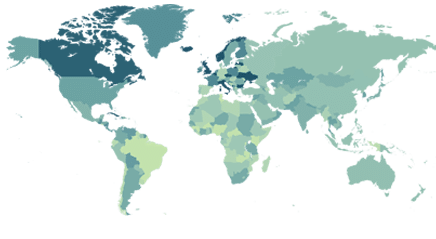
Gulf Region – UAE, Saudi Arabia, Qatar, Kuwait, Bahrain, Oman
The Gulf’s oil & gas, petrochemical, and desalination industries are primary consumers of XM-19 Round Bar. The two defining applications in GCC markets are:
- Downhole tubulars and drilling hardware: Nitronic 50HS cold-worked bars are widely specified for drill collar subs, stabiliser mandrels, and non-magnetic drill collar sections where the high yield strength (120+ ksi) and near-zero magnetic permeability (<1.02) are mandatory — magnetic components distort MWD (Measurement While Drilling) directional surveys. Saudi Aramco and ADNOC drilling contractors regularly source UNS S20910 bar in 6″–10″ diameters for this application.
- Desalination plant: Flash evaporator baffles, high-pressure pump shafts, and RO vessel support components. Jade Special Metals holds SABER pre-registration for Saudi Arabia and ESMA documentation for UAE import compliance. Arabic-language MTCs available on request.
Asia – Singapore, South Korea, Japan, India, Malaysia, China, Taiwan
Asian demand for Nitronic 50 round bars is primarily driven by the offshore, chemical, and cryogenic equipment sectors. Specific demand patterns by sub-region:
- South Korea & Japan: Offshore FPSO equipment, LNG carrier components requiring cryogenic toughness to −196°C, and semiconductor-grade chemical handling systems. Stainless Steel Nitronic 50 Bar is accepted under JIS G4303-equivalent customs classification and can be supplied with third-party inspection (TPI) by KGS, KR, or JIS-accredited bodies on request.
- Singapore & Malaysia: EPC contractors on Jurong Island and at Pengerang (Malaysia’s RAPID complex) specify ASTM A276 Nitronic 50 for seawater-cooled heat exchanger tube sheet bolting, pump shaft, and chemical plant internals where 316L has insufficient strength-to-weight ratio.
- India: Defence (DRDO, HAL supply chains), offshore (ONGC, L&T Hydrocarbon), and pharmaceutical API plant. Nitronic 50 suppliers in India are largely importers; Jade Special Metals holds ready Mumbai-accessible stock with fast domestic delivery and supports C-form / Form-H GST documentation for Indian buyers.
- China & Taiwan: PCB and semiconductor etch chemistry, high-pressure vessel fabrication, and fastener manufacturers requiring non-magnetic high-strength bar.
Europe – Germany, Italy, UK, Netherlands, France, Scandinavia, Poland
European buyers of XM-19 / Nitronic 50 bar operate under the Pressure Equipment Directive (PED 2014/68/EU), NORSOK (Scandinavia/North Sea), and EN 10088-3 standards. Key European applications:
- Germany: Chemical engineering (BASF, Evonik, LANXESS supply chains) for high-pressure reactor internals, heat exchanger tube sheets, and corrosion-resistant fasteners. Werkstoff Nr. 1.3964 documentation provided.
- Scandinavia (Norway/Sweden): NORSOK M-630 / M-650 compliance for North Sea subsea hardware, valve stems, and non-magnetic drill collar sections. Nitronic 50 forged bar up to 400 mm dia supplied with Level 3 UT and EN 10204 3.2 certification.
- UK: North Sea offshore (Oil & Gas UK supply chain), nuclear decommissioning (high-strength, corrosion-resistant applications), and defence (MOD specifications). AMS 5764 documentation available.
- Netherlands & Belgium: Rotterdam-based chemical and petrochemical EPC firms specify UNS S20910 for chloride-bearing process service. DAP Rotterdam and DDP delivery terms offered.
- Italy: Marine (Fincantieri supply chain), oil & gas (ENI/Saipem EPC), and specialist fastener manufacturers. CE marking and REACH compliance documentation supplied.
All European shipments: REACH compliance statement, EN 10204 3.1/3.2 MTC, and PED material certification available. Incoterms DAP/DDP to Rotterdam, Hamburg, Antwerp, Tilbury, and Genova.
Stainless Steel Nitronic 50 / XM-19 Round Bars Inventory

Nitronic 50 / XM-19 Hex Bar

Nitronic 50 / XM-19 Square Bar

Nitronic 50 / XM-19 Bright Bar

Nitronic 50 / XM-19 Threaded Bar
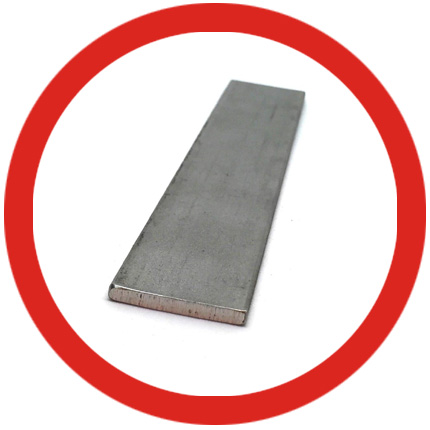
Nitronic 50 / XM-19 Flat Bar

Nitronic 50 / XM-19 Rectangular Bar
Available Stock of ASTM A276 Stainless Steel Nitronic 50 / XM-19 Round Bars
- Stainless Steel Nitronic 50 Cold Drawn Bars
- Nitronic 50 Hexagonal Bar
- Nitronic 50 Stainless Steel Square Bars
- Nitronic XM-19 Bar
- UNS S21910 Round Bar
- WERKSTOFF NR. 1.3964 Bars
- ASTM A479 Nitronic 50 Polished Bar
- Nitronic 50 Rectangular Bar
- Nitronic 50 Forged Bars
- Nitronic XM-19 Half-Round Bar
- ASTM A276 Type Nitronic 50 Hex Bar
- Nitronic XM-19 Flat Bar
- UNS S21910 Rods
- WERKSTOFF NR. 1.3964 Triangle Bar
- ASTM A276 Nitronic 50 Bright Bar
- ASTM A276 Nitronic 50 Precision Ground Bar
- XM-19 Bright Round Bar
- Nitronic 50 Threaded Bars
- Nitronic 50 Hollow Bar
- Nitronic 50 Stainless Steel Rods
- UNS S21910 Flat Bars Supplier
- WERKSTOFF NR. 1.3964 Flat Bars
- Nitronic 50 Austenitic Stainless Steel Bar
- Nitronic XM-19 Cold Drawn Round Bar
- Nitronic 50 Bars Manufacturer
- Nitronic 50 Stainless Steel Hex Bars
- ASTM A276 Type Nitronic 50 Cold Rolled Bar
- Nitronic 50 Stainless Steel Bar Distributor
- UNS S21910 Square Bar Exporter
- WERKSTOFF NR. 1.3964 Bright Bar
- ASTM A276 Type XM-19 Flat Bar Rolled Edge
- ASTM A479 Nitronic 50 Stainless Steel Bar
- 1.3964 Stainless Steel Rods
- Nitronic XM-19 Black Bar Stockist
- Nitronic XM-19 Round Bar
- Nitronic 50 Round Bar Price
Applications of Nitronic 50 / XM-19 Round Bars
- Oil, Gas & Petrochemical: Non-magnetic drill collar mandrels and subs, stabilisers, BHA (bottom-hole assembly) components, pump shafts and valve stems in sour-service environments compliant with NACE MR0175/ISO 15156, and downhole instrumentation housings where magnetic permeability <1.02 is mandated. Nitronic 50HS bars in 6″–10″ diameters are a primary material for directional drilling tools where the combination of 120–150 ksi yield strength, near-zero magnetism, and corrosion resistance to H₂S/CO₂ brines eliminates the need for exotic nickel-base alloys at significantly lower cost.
- Marine & Offshore: Propeller shafts, rudder stocks, stern tube liners, marine fasteners, and subsea connector bodies. Nitronic 50 round bar outperforms standard 316L in seawater by virtue of its higher PREN, while providing 2.4× the yield strength — allowing shaft and fastener cross-sections to be reduced by ~35% versus 316L designs, delivering significant weight savings in topside and subsea structures.
- Chemical & Pulp Processing: Agitator shafts, pump impellers, valve bodies, and heat exchanger tube sheet drilling stock in phosphoric acid, chlorine, hypochlorite, and oxidising acid service. The Stainless Steel Nitronic 50 Bar is the material of choice for bleaching plant equipment in pulp mills where the combination of hot dilute sulphuric acid and chlorine dioxide rapidly destroys 316L and even 317L stainless steel.
- Cryogenic & LNG Applications: LNG carrier cargo tank supports, liquid nitrogen valve bodies, cryogenic pump shafts, and aerospace ground-support equipment operating at temperatures down to −196°C. The Charpy impact value of 50 ft-lbs at −320°F (−196°C) exceeds the typical code minimum of 20 ft-lbs for cryogenic pressure vessels, making UNS S20910 a code-acceptable choice under ASME Sec. VIII, Div. 1 for lethal and low-temperature services without supplemental impact testing requirements.
- Medical & Food Grade: High-strength, non-magnetic orthopaedic implant components (where the non-magnetic character is required for MRI compatibility), food-processing equipment requiring resistance to citric and organic acid CIP (Clean-In-Place) solutions, and pharmaceutical bioreactor internals where smooth surface finish and resistance to protein adhesion are required. Nitronic 50 bar to ASTM A276 with EP (electropolished) finish is used in Class A biopharmaceutical clean rooms.
- Aerospace & Defence: Airframe fasteners where galvanic compatibility with aluminium structure is required, hydraulic actuator components, and aircraft landing gear fittings where the high specific strength (strength/density) of Nitronic 50HS reduces weight versus lower-strength alloys. AMS 5764 documentation provided for aerospace supply chain compliance.
Why Choose Jade Special Metals for Nitronic 50 Round Bars?
Certified material traceability: EN 10204 3.1 MTC with all shipments; 3.2 third-party inspection by SGS, Bureau Veritas, Intertek, or TUV on request. Full heat-to-certificate traceability.
- Ready inventory: Nitronic 50 round bars in diameters 5–200 mm held in stock for immediate dispatch. Larger diameters and HS condition on 2–4 week lead time.
- Value-added processing: In-house saw cutting, precision turning, centreless grinding, and threading reduce your procurement lead time significantly.
- Gulf, Asia & Europe specialist: SABER (Saudi Arabia) and ESMA (UAE) product documentation; DIN / EN Werkstoff Nr. 1.3964 for European buyers; L/C accepted for Gulf and Asian buyers; SEPA wire for European accounts. Arabic, Chinese, and German MTCs on request.
- Technical expertise: Our metallurgical team supports grade selection, PREN calculations, NACE MR0175 compliance reviews, and welding procedure qualification — essential for EPC project engineering teams.
- Compliance: ASTM A276, ASME SA276, ASTM A479, ASME SA479, AMS 5764, EN 10088-3 (DIN 1.3964), NACE MR0175/ISO 15156, PED 2014/68/EU.