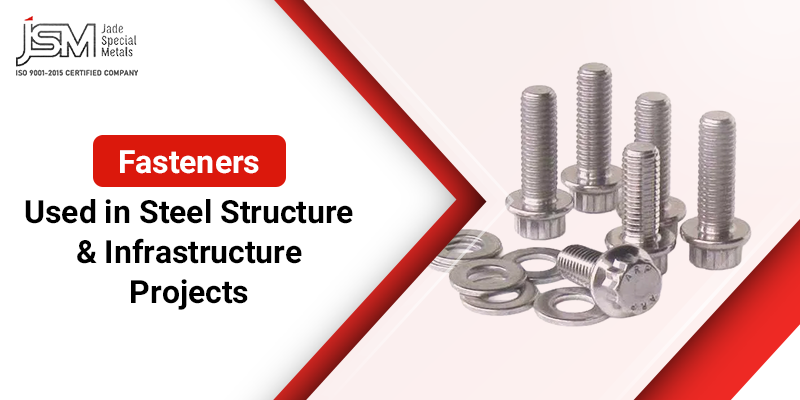
Fasteners are not an optional part in the massive infrastructure work or any construction which involves using steel to make a building, and in that case, they are very important in determining the effectiveness of the structure. All the regions of a steel structure rely on fasteners to make sure that it is capable of taking the loading, fatigue and being able to maintain its integrity when experiencing dynamic loading. As the demands of large projects intensify, fasteners of high strength, including those of ASTM F3125 specifications, are used.
The grade of fasteners to be chosen is a technical choice and not just a beneficial purchasing choice to structural engineers, EPC contractors and procurement teams. A correct grade in tensile steel is essential to the achievement of a satisfactory tensile steel strength, suitable ductility, and consistency in laboring under loads, a factor that also adds up to compliance to codes and size of margin. The assessment of fasteners on an exhaustive basis in terms of grades and application to ensure the integrity of steel structures at difficult construction sites is important.
Why Fasteners Are Critical in Steel Structure and Infrastructure Engineering
Fasteners in massive infrastructure and steel fabrication projects are much more than auxiliary support; they are safety-related elements that have a direct impact on structural operation and long-term security. All the connections within a steel structure rely on the mechanical integrity of bolts and fasteners to transmit loads, withstand fatigue, and support alignment in the face of dynamic loads. With the escalation of project scale and design needs, the industry has been experiencing a conclusive move towards the high-strength fastener standard like ASTM F3125 that consolidates and substitutes previous specifications, but guarantees comparable mechanical properties and performance conformity.
To structural engineers, the EPC contractor, and procurement managers, the choice of the right grade of fastener is an essential engineering choice and not a procurement formality. The right grade provides sufficient tensile strength, controlled ductility, and predictable performance under load, which has direct bearing on code compliance and safety margins. Responsible consideration of the standards, grades and functions of fasteners, combined with careful appraisal of structural integrity, risk reduction and provision of durable and regulation-consistent steel structures in the challenging construction contexts are vital.
Types of Fasteners for Steel Structures: An Overview
Steel construction fasteners are widely divided according to their purpose, loading considerations, and installation mode in structural and infrastructure works. The different types of fasteners have a certain role in maintaining the level of load transfer, stability, and longevity of the steel and composite structures.
- Structural bolts: Structural bolts are high-strength steel-to-steel connections made of heavy hex Bolts. The huge hexagonal head and nut increase the bearing area, and they can distribute the load efficiently among the associated members. These bolts are commonly applied in beams, columns, and bracing structures where tensile and shear strength are essential.
- Tension Control (TC) bolts: They are a specialized type to be used on high-volume joints of the structure. They have a splined end that unscrews with the required tension to allow visual confirmation that it has been properly installed, providing prompt visual confirmation. This predisposes TC bolts to be used in the case of a project that requires speed, consistency, and quality control.
- Anchor bolts: It is applied to hold steel columns, base plates or equipment to concrete foundations. They are embedded in concrete as the building is poured or placed in the building after the building has been built, and they then carry loads of the superstructure to the foundation.
- Weld studs: It is mostly applied in composite buildings, in which steel beams are used in collaboration with concrete slabs. They improve the transfer of shear, which allows the steel and concrete to act as one structural system.
| Fastener Type | Primary Use Case | Key Characteristic |
| Heavy Hex Structural Bolt | Steel-to-steel connections | Large head for bearing load |
| Tension Control (TC) Bolt | High-volume structural joints | Visual confirmation of tension |
| Anchor Bolt | Foundation to Column | Embedded in concrete |
Structural Bolts: The Backbone of Steel Structures
The most important difference between a typical machine bolt and a typical structural bolt is in their design philosophy and design conditions. Machine bolts should be used when loads are low and the failure is not structural, whereas structural bolts are designed to resist high tensile and shear loads, and are needed in steel connections, which are critical to the structural integrity of the structure. A major difference is the heavy hex head geometry of structural bolts, which has a larger bearing surface than normal hex bolts and this offers a greater allocation of the load and lowers the concentration of stress around this connection point. Also, the structural bolts are produced with shorter, controlled thread length so that threads remain out of the shear plane such that the loads are transferred via the solid shank instead of weaker threaded areas. All these geometric characteristics contribute to the increase of the reliability of the joints, load-bearing capacity and their structural integrity in the construction usage of high requirements.
Heavy Hex Structural Bolts and High-Strength Standards (ASTM A325, F3125)
The structural bolts, which are used as heavy hex, are of various sizes and types. The following are some of the most widespread dimensions of these bolts.
- ASTM F3125: The present standard of unified structural bolt substituted ASTM A325 and ASTM A490. It simplifies specifications by establishing standard mechanical, chemical and dimensional standards of high-strength structural bolts employed in steel construction.
- ASTM A325: A standard heritage defining medium-carbon steel structural bolts of tensile strength of at least 120 ksi. They are usually bolts used in the normal steel-to-steel connections in buildings as well as in general infrastructure.
- ASTM A490: An old high-strength specification of alloy steel bolts with tensile strength at minimum of approximately 150 ksi. They are to be used in heavier loads and structural applications which are more intense like bridges and critical joints.
- Type 1 (Medium Carbon Steel): Naming of bolts that are produced using medium-carbon steel. Applicable in the case of indoor or sheltered surroundings and mostly need corrosion-resistant finishes.
- Type 3 (Weathering Steel): Weathering structural steel bolts covered with a protective layer of oxide when in the air are designated. Ideal in open and outdoor structures, where the need is to have enhanced corrosion resistance.
| ASTM Standard | Material Type | Tensile Strength | Typical Application |
| ASTM F3125 Gr. A325 | Medium Carbon Steel | 120 ksi | General Structural Steel |
| ASTM F3125 Gr. A490 | Alloy Steel | 150 ksi | Heavy Load / Bridges |
| ASTM A193 B7 | Cr-Mo Steel | 125 ksi | High Temp / Pressure |
Steel Construction Fasteners: High Strength Nuts (ASTM A563 and A194)
Structural bolts should thus be consistently used together with compatible nuts of equal high strength in steel construction so that they can work as intended. Improper choice of preload, joint integrity, and overall safety can be affected by using incompatible or inferior nuts. The main standard is ASTM A563 of carbon and alloy steel nuts employed with structural bolts, Grade C and Grade DH of which are often used as specifications in ASTM F3125 structural bolting assembly because they are compatible with structural steel in strength and hardness. ASTM A194 Grade 2H nuts are often utilized in such more taxing conditions, particularly when it comes to increased temperatures and pressures, so they are a popular replacement in heavy structural work. The heavy hex nut style is also necessary in structural bolting systems, and this ensures a higher bearing surface and is also thicker than the normal hex nuts. This geometry enhances the allocation of loads, mitigates the possibility of nut stripping, and also guarantees stable operation in high-load, safety-critical steel connections.
| Nut Grade | Compatible Bolt | Proof Load Stress |
| ASTM A563 Grade C | A325 / F3125 | 144 ksi |
| ASTM A563 Grade DH | A490 / F3125 | 175 ksi |
| ASTM A194 Grade 2H | A193 B7 / A325 | 175 ksi |
Specialized Fasteners: ASTM A193 B7 and A320 L7 for Extreme Conditions
Where temperature extremes dictate the material performance, ASTM A193 B7 and ASTM A320 L7 specialized bolts are specified instead of standard structural bolts. ASTM A193 Grade B7 fasteners have been produced using chromium-molybdenum alloy steel, and it is designed to maintain their strength and stability at high temperatures. B7 bolts are also applied in structural retrofits and industrial steel structures subjected to continuous heating, with B7 bolts being preferred over conventional ASTM A325 bolts because the latter can lose their preload or have their strength diminish over time. Conversely, the ASTM A320 Grade L7 fasteners are designed to serve at low temperatures, with better toughness and impact resistance at low temperatures and sub-zero environments. They are commonly specified in cold climates in arctic structures, cold storage, and offshore structures. Such grades must be chosen instead of normal A325 structural bolts when the conditions of high or low temperatures threaten ductility, retention of loads, or structural stability over longer periods.
Infrastructure Fasteners: Applications in Bridges, Buildings, and Heavy Engineering
Fasteners are of great importance in large-scale infrastructure in a variety of applications. The high strength of the ASTM A490 or F3125 bolts is used in bridges to be resistant to vibration, dynamic traffic loading, and fatigue in order to maintain long-term stability. Structural fasteners used in high-rise buildings provide the ability to connect in the slip-critical and seismic-resistant modes, using the steel frames to effectively absorb and dissipate the impact of earthquakes. Hot-dip galvanized fasteners are used in the energy infrastructure, such as transmission towers and wind turbines, where they are needed to increase corrosion resistance in those harsh outdoor environments. In the meantime, heavy-duty anchor bolts are needed, especially in industrial plants, to fix the machinery and columns of the structure to the concrete base, ensuring that it is within a very narrow tolerance and that it supports both the weight and dynamism. A combination of these fasteners facilitates safety, durability and performance in the most important structural uses.
| Application | Primary Challenge | Recommended Fastener |
| Highway Bridges | Vibration / Fatigue | A490 / F3125 Type 3 |
| Steel Skyscrapers | Shear Loads / Seismic | A325 / F3125 (Slip Critical) |
| Transmission Towers | Corrosion / Weather | A394 / Galvanized A325 |
Material Selection: Carbon Steel vs Alloy Steel Fasteners
The choice of the fastener is all about the best balance between cost, strength and durability to give a safe and longer-lasting structure.
- Carbon Steel Fasteners: More economical and can be used on the majority of buildings which are not in motion; usually A307 or A325. Average loads and restricted exposure to the environment.
- Alloy Steel Fasteners: Strength increased and fatigue increased; Grade A490 and B7, are examples. Very useful in high-load dynamic or critical connections, although more costly than carbon steel.
- Weathering Steel Fasteners: Corten-type of fasteners that do not require any painting to be corrosive to the atmosphere. Appropriate in outdoor or uncovered constructions where durability is of great necessity.
- Coatings and Finishes: Hot-dip galvanizing: Provides optimum corrosion resistance to severe conditions.
- Zinc plating: Can be used in moderate exposure with certain level of corrosion resistance.
- Plain/Black finish: Indoors or sheltered with a low degree of exposure.
- Trade-off Summary: To maintain the structural safety, durability, and economic efficiency, selection entails appointment of the balance between cost, strength, and durability.
Installation and Quality Standards for Steel Structure Fastening Systems
The proper installation is critical for stainless steel fasteners because it’s ensure the structural safety, performance, and long shelf life.
- Pre-Installation Verification (PIV): The first thing that needs to be done is to check the conduct rotational capacity testing (RoCap) to confirm bolt and nut assemblies can handle the required preload before installation.
- Tensioning Methods: Always use the approved methods, such as turn-of-nut or calibrated torque wrenches, direct tension indicator, or tension control bolts to get the accurate and consistent tension.
- Traceability: Always check the mill Test Reports (MTRs) for all the fasteners to verify their material properties and specifications.
- RCSC Guidelines: Follow the guidelines given by the Research Council on Structural Connections (RCSC) for any type of slip-critical and bearing-type connection to ensure the safety and joint reliability.
- Key Takeaway: To get the best quality stainless steel fasteners, you also need to check other things, like whether the fasteners are properly installed or not, checking the tension, and verifying all the things.
Conclusion
The material most often used in the construction world is fasteners, and they bear the most important role that holds the steel structures together. Preferred standard, e.g., ASTM F3125 in case of structural bolts, or ASTM A193 in case of high temperature application, ensures that the connections will be safe to carry the desired values of loads and ambient conditions. The correct material choice, thread geometry, and installation practices must provide long-term structural integrity. Jade alloy team and engineers, procurement managers supply certified traceable fasteners that are supported by Mill Test Reports (MTRs), which ensure quality, compliance and reliability of bridges, buildings, industrial plants, and other heavy engineering projects.