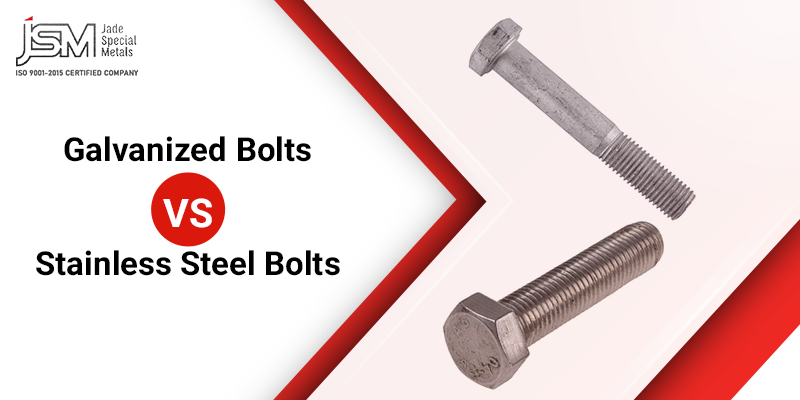
The selection of a suitable bolt material is very important in deciding on the long-term performance, safety, and durability of any project. The material has a direct influence on the corrosion resistance, strength, and maintenance needs whether it applies to structural frameworks, machines, or external installations. Galvanized bolts are mostly used due to the low cost of providing corrosion protection and Stainless Steel Bolts are used in high resistance and superior endurance in harsh conditions. Most engineers also use stainless bolts in applications that are exposed to moisture, chemicals or severe weather conditions.
This guide will give a comparison between Galvanized Bolts vs Stainless Steel Bolts that help user to understand the difference between them and also tell how important bolts are in the industrial and construction industries, where using the wrong fastener may result in failure of the structure, higher expenses, and constant replacements. The knowledge of the differences can assist professionals in making responsible and sound decisions.
What Are Galvanized Bolts?
Galvanized bolts are bolts made out of carbon steel that is covered with a protective layer of zinc to stop rusting and corrosion and are therefore a cost-effective substitute to stainless steel bolts in most structural use cases. The main principle of the galvanization bolts is that they are manufactured by applying a coating on the bolts or metal with the help of the hot-dip or electro-galvanizing method. In hot-dip galvanizing, a thick coating of 5080 microns of zinc is deposited on the bolts by submerging them in hot molten zinc at temperatures of approximately 450 °C. In electro-galvanizing, zinc is deposited in a thin coating of 525 microns by dipping into an electrical current. The use of hot-dip coating provides great durability as it can be used in moderate outdoor environments of up to 20-50 years. The main characteristics of galvanized bolts are that they have high corrosion resistance, better surface protection, good mechanical strength, and low cost thus, galvanized bolts are used extensively on construction, infrastructure, and utility works.
What Are Stainless Steel Bolts?
Stainless Steel Bolts are steel bolts that are resistant to corrosion and they consist of iron based alloys with 10.5% chromium which forms a coating of passive oxide that protects against rust. They are usually composed of nickel (8 -12% ) to provide strength and ductility and in marine versions molybdenum (2 -3% ) to enhance resistance to chlorides. Common grades in common applications with universal standards like ASTM F593 and ISO 3506 include 304 stainless bolt (A2) in typical applications outdoors, and 316 stainless bolt (A4) in typical applications in the marine and chemical sectors. The tensile strength of stainless bolts (typically 500700Mpa) is high, the stainless bolts have a long service life, and low maintenance which compared to galvanized bolts, make them preferable to use in the industrial, structural and coastal applications.
Comparison Between Galvanized Bolts vs Stainless Steel Bolts
The selection of the appropriate bolt material is dependent on the performance of each bolt in the various conditions. The following is a physical properties comparison between them to understand the major differences.
Corrosion Resistance
Stainless steel Bolts:
It is strong against rust since the chromium present in the material forms a natural layer that gives the material great resistance against rust. They are efficient in areas that are wet and corrosive.
Galvanized Bolts:
It is covered with a layer of zinc which enables it to resist rust. But in case the coating is worn off or created in wet conditions, the underlying steel can corrode with time.
Strength and Durability
Stainless steel Bolts:
The stainless steel bolts are normally stronger and have a higher load-bearing capacity and thus fit in heavy-duty application.
Galvanized Bolts:
They are extremely strong and can be used in many construction applications, however, are not generally as strong as stainless steel in high-stress applications.
Appearance and Usage
Stainless steel Bolts:
It has a smooth, polished finish, which is suitable to be used in visible or decorative purposes.
Galvanized Bolts:
They are, probably, a bit dull with a sort of industrial finish and are usually utilized in the application where functionality is more important than beauty.
Key Factors to Evaluate Before Selecting Bolts
Once you have understood the fundamental characteristics and which ones compare the galvanized and stainless steel bolts, it is now time to put such characteristics into the context of your project. The following are the main considerations that have been incorporated into the decision-making process:
Project Requirements and Conditions
Stainless steel Bolts:
In wet or corrosive conditions, stainless steel is the best choice as it is the corrosion resistant one.
Galvanized Bolts:
Where corrosion is not a major problem and where the environmental conditions are drier, galvanized steel is a possible alternative, which is economical.
Budget and Cost-Effectiveness
Stainless steel Bolts:
Stainless steel bolts may be costly at first, but they may give long-term cost benefits since they last longer and require fewer replacements.
Galvanized Bolts:
The galvanized steel bolts may appear to be cheaper in the short term, but the maintenance and replacement expenses in the long term are high, mainly in corrosive environments.\
Load Capacity and Applications
Stainless steel Bolts:
The tensile strength of stainless steel is more efficient to be used in high-load situations, in situations where robust performance is important.
Galvanized Bolts:
Galvanized steel is also strong, but is more applicable in situations when extreme strength is not a critical consideration.
Installation & Usage Recommendations
While installing the Galvanized bolts or Stainless steel bolts, it is important to know about some installation procedures and precautions while installing it. Some of the common factors of these two are given below.
Avoid Mixing Metals:
Always avoid mixing galvanized bolts and Stainless Steel Bolts of these together. These are not similar metals, so direct contact, particularly when wet or in the open air, may cause galvanic corrosion, which causes premature rusting and early failure. In the case when your structure needs both materials, place insulating washers, sleeves, or protective coatings between them so that the possibility of an electrochemical reaction can be minimized.
Installation :
Bolts must be installed as per the guidelines. When tightened to excess, threads can be ruined, whereas they can loosen during vibration or loads when tightened too loosely. Ensure that surfaces are clean and well aligned prior to being fastened in order to have the highest holding strength and longevity.
Ductility in Fabrication:
In case your project has to do with bending or shaping something, keep in mind that galvanized bolts are less tricky to bend or shape. The stainless steel fittings are more durable but not as flexible and thus need more accuracy when they are being made and aligned.
Welding Precautions:
During the welding of stainless steel, proper temperature control is needed in order to maintain its corrosion resistance. When the metal being welded is galvanized, make sure the place is well ventilated, as welding produces fumes that can poison the atmosphere and weld through the zinc coating. Protective coating can be reapplied after welding of galvanized components.
Environment-friendly and Sustainability
The environmental factor becomes the major concern for every material whether it’s stainless steel bolts or Galvanized bolts. It’s important to choose the environmentally friendly bolts according to their environmental footprints.
Galvanized Steel Bolts:
Galvanized bolts release a little bit of zinc into the surrounding environment, and this could affect the soil, as well as the water resources in its vicinity. Plant growth and damage to aquatic ecosystems may also be experienced in the long run due to excessive zinc in the environment. Also, the galvanizing process needs a lot of energy and chemical processing, which also adds to its accumulative environmental footprint.
Stainless Steel Bolts:
Stainless steel can be recycled very easily, making it a more sustainable choice for use in the long run. It can be melted down and reused without losing its fundamental property, which will curb the supply of new raw materials. It also has a long life of service, hence requires fewer replacements, which reduces wastage and reduces the overall environmental impacts in the long run.
Conclusion:
The decision between stainless steel bolts or galvanized bolts would largely depend on your project, cost as well as long term performance. The galvanized bolts are cheaper than the stainless steel bolts; they are usually applied in general construction protection. On the other hand, for a durable and high corrosive environment, stainless steel bolts are used. The correct choice will guarantee the safety of the structure, less maintenance, and savings. Jade Alloy provides high-performance galvanized and stainless steel bolts that have been produced to international standards in order to provide high quality fastening solutions. Using quality material, stringent quality management, and industry knowledge, Jade Alloy makes sure that there is strength, durability and performance you can count on in every industrial and construction use.