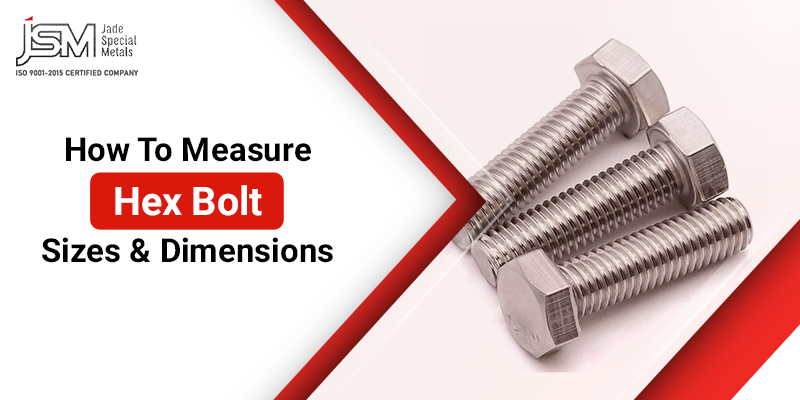
Understanding of How To Measure Hex Bolt Sizes and Dimensions is important in industrial, mechanical, and construction work where accuracy is the key factor in safety and performance. The proper identification of hex bolt dimensions will assure that components are properly seated and they will not loosen and cause any vibration damage or structural failure. In order to be properly installed, specialists need to consider the main dimensions of bolts, their diameter, the size of the head, and the thread pitch. In order to engage the material properly from the head and end of the shank, it’s important to measure the bolt length properly. A small error in measurement can cause incorrect distribution of loads, peeled threads, or potential loss of time, which can cost millions. Real-time Hex bolt size measurement will eventually boost the durability, reliability, and integrity of the entire system in harsh settings. In this guide, we tell you the proper technique to measure the hex bolts according to your requirements.
What Are Hex Bolt Dimensions & Sizes ?
Hex bolt dimensions and sizes are the key measurements used to define the fit and performance of a bolt in an assembly. The first specification is the nominal diameter, which is the thickness of the bolt shank and defines the load capacity and hole size. The length of the bolts is determined by measuring from under the head up to the threaded part, where the bolts must be properly engaged in the material.
The other consideration is the thread pitch in metric bolts or threads per inch (TPI) in imperial systems, which defines the distance between threads. To maintain the right wrench size, the head size is taken across flats. The hex bolt is either metric (ISO) or imperial (ANSI/ASME)-based, and to select a bolt correctly, a bolt size chart is necessary.
Tools Required To Measure Hex Bolt Sizes
Before you start It is important to gather some important tools that are required to measure hex bolts. The list of those tools is listed below.
- Calipers: The most important and accurate tool that is used to measure bolt diameter, head size, and length. In the market, you get both capillary digital and vernier ones.
- Thread Gauge: It’s used to measure the threads per inch (TPI) that help you to put the hex bolts into the right nut or trapper hole.
- Ruler or Tape Measure: This tool is used to check the overall length of the largest bolts. It’s less costly compared to calipers, but perfect for quick measurement or to confirm the sizes.
How to measure Hex Bolt Dimensions and Sizes
The Hex bolts dimensions and size measurement are done by measuring its different parts and for that, first you need to know how to measure every part of it to get the perfect hex bolt dimensions. Below is a step-by-step guide to identify the parts, and then how to measure hex bolt sizes and dimensions.